Unlike most hazards covered on this site, lead paint prevention for new construction is largely a non-issue — worth understanding why.
- New construction using post-1978 materials doesn’t carry meaningful original lead paint risk.
- There’s no equivalent preventive construction feature needed for lead the way there is for radon.
- Sites with a prior demolished older structure could theoretically have residual soil contamination.
- New construction buyers can reasonably deprioritize lead paint testing, unlike for most other hazards.
Why New Construction Doesn’t Need Lead Paint Prevention Features
Since consumer lead paint sales were banned in 1978, new construction using modern materials doesn’t carry meaningful lead paint risk — there’s no equivalent “radon-resistant rough-in” style feature needed for this hazard in new builds.
When New Construction Buyers Should Still Consider Lead
If new construction was built on a site with a demolished older structure, or if you’re considering nearby renovation of an older accessory structure or property line features, lead-contaminated soil from the prior structure’s deteriorated paint could theoretically be a relevant consideration, though this is a narrower edge case than the direct paint risk in older homes.
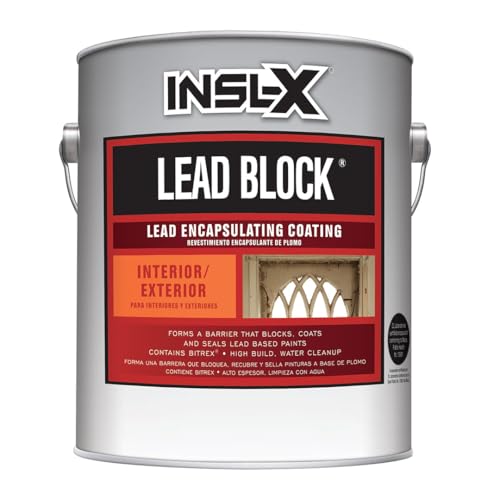
Bottom Line for New Construction Buyers
This is one of the few home hazards where new construction buyers can reasonably deprioritize testing, in contrast to most other home hazards, where construction date alone doesn’t guarantee safety.

What the 1978 Date Covers, and What It Does Not
The reason new construction needs no lead-paint design feature is that the material was removed from the supply chain rather than engineered around. EPA states that in 1978 the federal government banned the sale of lead-based paint for use in homes and childcare facilities[1]. There is no ventilation detail or sub-slab membrane to specify because there is no source in the assembly to manage.
The date is worth holding precisely, because a second lead pathway in the same house runs on a different one. EPA notes that lead pipes are more likely to be found in older cities and homes built before 1986, and that lead can enter drinking water as plumbing materials containing lead corrode[1]. A house finished in 1982 is post-ban for paint and pre-1986 for plumbing. “New construction” in 2026 clears both comfortably, but the reasoning that clears it is two separate facts rather than one.
The Site Can Be Older Than the Structure
This is the genuine edge case, and EPA describes the mechanism rather than leaving it to inference. Higher soil lead is typically found near the perimeter of buildings, such as the dripline, that used lead-based paint; near roadways, because of air emissions from vehicles that used leaded gasoline; and near hazardous waste sites or industrial areas[1]. Yards can become contaminated when exterior lead-based paint flakes or peels into the soil[1].
None of those depend on the age of the house currently standing there. An infill lot where a pre-1978 house was demolished, a new build on a former industrial parcel, and a new house fronting a road that carried leaded traffic for decades all inherit soil history the structure has nothing to do with. EPA also notes that soil lead is tracked into homes on shoes, clothes and other objects[1], which is the route by which an outdoor legacy becomes indoor dust in a brand new house.
New-Build Owners Who Are Still Inside the RRP Rule
The rule follows the building being worked on, not the one you live in. EPA states that the RRP Rule requires anyone paid to perform work that disturbs painted surfaces in homes, childcare facilities and preschools built before 1978 to be certified[2], and that while it generally does not apply to homeowners working on their own pre-1978 home, it does apply if you rent all or part of your home, operate a childcare center in it, or buy, renovate and sell homes for profit[2].
So a new-construction owner with a pre-1978 rental property, a home-based childcare business in an older building, or a renovation-and-resale sideline is squarely in scope for that work. Living in a new house exempts the house, not the person.
Where the Attention Belongs Instead
Construction date closes the residential paint question and leaves the exposure routes that never depended on it. EPA lists jobs that bring people into contact with lead including renovation, repair or painting of older homes, construction, mining, smelting, battery recycling, refinishing old furniture, auto repair and handling firearms, and hobbies including fishing with tackle containing lead, making stained glass, stock car racing, and shooting and reloading lead ammunition[1]. It notes lead is found in especially high levels in ammunition, fishing tackle such as sinkers, lures and jigs, and wheel balancing weights used on cars[1].
OSHA describes the route by which that reaches a household, noting that another source of environmental exposure to lead is workers who take home lead dust on their clothing and shoes[3]. A two-year-old house with a reloading bench in the garage has a live lead pathway, and its construction date has no bearing on it at all.
FAQ
Do I need to test a brand new home for lead paint?
Generally no — new construction using modern, post-1978 materials doesn’t carry meaningful lead paint risk from the paint itself.
Does a post-1978 build also mean the drinking water is fine?
Not automatically. That question runs on 1986, not 1978: EPA notes lead pipes are more likely in older cities and homes built before 1986, and that testing is the only way to know because lead in water cannot be seen, tasted or smelled[1]. A 2026 build clears both dates; an early-1980s one only clears the first.
My house is new but I refinish furniture in the garage. Does that matter?
Yes, and independently of the house. EPA lists refinishing old furniture among activities that bring people into contact with lead[1], and OSHA identifies take-home lead dust on clothing and shoes as a recognised route of household exposure[3].
This applies to the paint itself — if concerned about soil from a prior structure on the same site, a separate soil test could address that narrower scenario.
References
- Reduce the Risk of Lead Exposure at Home. U.S. Environmental Protection Agency
- Lead Renovation, Repair and Painting Program. U.S. Environmental Protection Agency
- Lead: Overview. Occupational Safety and Health Administration, U.S. Department of Labor
These statements have not been evaluated by the Food and Drug Administration. This information is not intended to diagnose, treat, cure, or prevent any disease. Content is for informational purposes only and is not medical advice; consult a qualified healthcare provider before starting any supplement. As an Amazon Associate we earn from qualifying purchases.
