Lead paint risk research at the neighborhood level is more straightforward than for some other hazards, since it maps closely to housing age.
- Public property records show construction dates, a quick neighborhood-level research step.
- Some cities/counties publish lead hazard data by neighborhood or address.
- Neighborhood age research is useful context, never a substitute for testing the specific property.
- Repainting and remediation history can vary significantly even within the same older neighborhood.
Researching Neighborhood Housing Age
Public property records typically show construction dates, letting you quickly assess whether a neighborhood’s general housing stock predates 1978 — a useful, easily accessible research step before even viewing specific properties.
City/County Lead Program Data
Some cities and counties publish lead hazard data by neighborhood or address, particularly in areas with active lead poisoning prevention programs — worth checking your local health department’s resources.
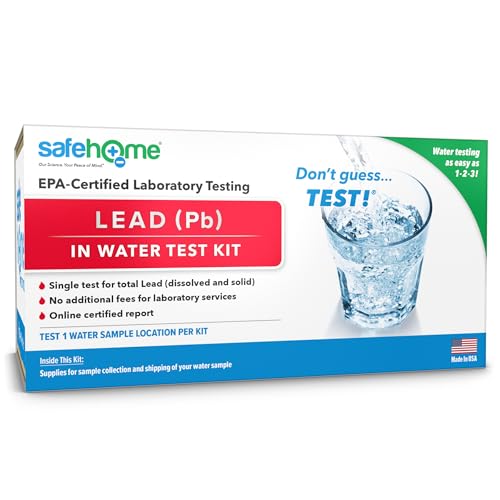
Why You Still Must Test the Specific Property
Even within a known older-housing neighborhood, specific properties vary based on repainting history and prior remediation work — always test the specific home you’re considering rather than relying on neighborhood age alone.

What Housing Age Actually Tells You
Construction date is a genuinely strong indicator here, which is unusual among home hazards, but it is worth being precise about what it predicts. EPA states that a home built before 1978 is more likely to have lead-based paint, and that approximately three-quarters of pre-1978 homes in the United States still contain some[1]. That is an odds statement about a neighborhood, not a verdict on a house.
Which makes the useful output of neighborhood research a shortlist rather than a score. A street of 1920s housing tells you to budget for an inspection and to read the disclosure carefully. It does not tell you which of those houses has intact paint on a well-maintained window and which has a sash that has been opening and closing against bare lead paint for forty years, and that difference is the one that determines exposure.
Look at the Ground, Not Only the Buildings
Soil is the part of neighborhood risk that genuinely is neighborhood-level, because it is produced by things larger than any one lot. EPA reports that higher levels of lead are typically found in soil near roadways, because of air emissions from vehicles that used leaded gasoline; near the perimeter of buildings, such as the dripline, that used lead-based paint; and near hazardous waste sites or industrial areas[1].
It also notes that yards and playgrounds can become contaminated when exterior lead-based paint from houses, other buildings and older playground equipment flakes or peels and gets into the soil, and that lead in soil is tracked into homes on shoes, clothes and other objects[1]. Two practical consequences for a buyer: a busy arterial road and an industrial parcel are legitimate things to notice on a viewing, and the strip of ground along the dripline of the house next door is as relevant as the house you are actually buying.
The Water Line Is a Different Question With a Different Date
Neighborhood-level research is where the plumbing question is most easily missed, because it runs on its own calendar. EPA notes that lead pipes are more likely to be found in older cities and homes built before 1986, that where a lead service line connects the home to the water main it is typically the most significant source of lead in drinking water, and that because you cannot see, taste or smell lead in water, testing is the only way to know[1].
The 1986 date is eight years later than the paint date, so an area that is entirely post-1978 can still be substantially pre-1986. Local water systems increasingly publish service line material inventories by address, which makes this one of the few genuinely address-level datasets available before an offer.
What the Seller and Landlord Already Owe You
Some of this research is not research at all, because the obligation sits on the other side of the transaction. EPA notes that real estate agents play a role in protecting the health of families purchasing, renting and moving into pre-1978 homes, and that if you rent a pre-1978 home your landlord or property management company must comply with the RRP Rule when performing work that disturbs paint[2]. Property management companies that perform or offer such work in a pre-1978 residential building must themselves become lead-safe certified firms[2].
For a renter comparing neighborhoods that is the more actionable fact than any map: the standard applied to maintenance work on a pre-1978 building is set by federal rule rather than by the landlord, and a landlord who proposes to have an uncertified handyman sand window frames is describing a violation rather than a quirk.
FAQ
Can I estimate lead paint risk just from a neighborhood’s general age?
It’s a useful starting indicator, but always test the specific property — repainting and remediation history varies significantly even within the same neighborhood.
If the neighborhood is all pre-1978, is testing still worth it?
Yes, and arguably more so. EPA’s three-quarters figure is a population statistic[1]; EPA’s own instruction to homeowners is to hire a certified inspector or risk assessor, or else to assume the home has lead-based paint and manage it on that basis[1].
Should I look at soil as well as paint?
Where the house sits near a busy road, an industrial parcel, or the dripline of an older painted building, yes. EPA identifies all three as places higher soil lead is typically found, and notes it gets tracked indoors on shoes and clothes[1].
Neighborhood-level information is context, not a substitute for testing the specific property you’re purchasing.
References
- Reduce the Risk of Lead Exposure at Home. U.S. Environmental Protection Agency
- Lead Renovation, Repair and Painting Program. U.S. Environmental Protection Agency
These statements have not been evaluated by the Food and Drug Administration. This information is not intended to diagnose, treat, cure, or prevent any disease. Content is for informational purposes only and is not medical advice; consult a qualified healthcare provider before starting any supplement. As an Amazon Associate we earn from qualifying purchases.
