Lead paint prevention technology has evolved in specific ways worth knowing about, particularly around detection and encapsulation.
- Newer portable XRF devices offer faster, more accurate readings than older equipment.
- The 20 year encapsulant warranty is HUD’s threshold for the work to count as abatement, not a product upgrade.
- Newer lead dust testing services offer faster turnaround for verification purposes.
- The substantive 2024 change is regulatory: EPA lowered the post-abatement dust-lead levels and renamed both thresholds.
Improved Portable XRF Devices
Newer handheld XRF devices offer faster reading times and improved accuracy at lower lead concentrations near the action level, making professional inspections somewhat more efficient than older-generation equipment.
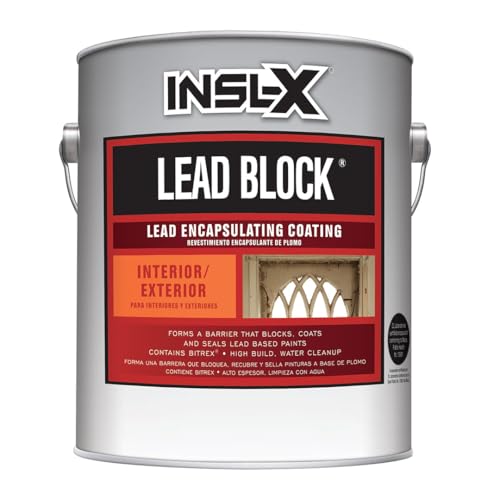
Advanced Encapsulant Products
Encapsulant marketing leans on warranty length, and 20 years is the figure most often quoted. That number comes from HUD’s conditions for encapsulation to count as federally supported abatement rather than from a comparison between product generations, and HUD’s own assessment of encapsulation as a method is more guarded than the catalogue copy suggests.
Lead Dust Monitoring
Some newer consumer-accessible lead dust wipe testing services offer faster turnaround and clearer reporting than older mail-in lab processes, making DIY-initiated clearance-style verification somewhat more accessible.

Where the 20 Year Warranty Number Comes From
It is not a premium product tier. HUD makes a manufacturer warranty of at least 20 years one of the conditions under which encapsulation counts as federally supported lead-based paint abatement: the product or system must be warranted to perform for at least 20 years as a durable barrier between the lead-based paint and the environment in locations or conditions similar to those of the planned application[1]. A 20 year warranty is the entry requirement for that classification, not evidence that one brand has pulled ahead of another.
It also decides which rule governs the work. HUD states that where the purpose of encapsulation is permanent, meaning 20 years or more, elimination of lead-based paint hazards, the project is abatement and EPA’s abatement rules apply instead of the Renovation, Repair and Painting Rule, while an encapsulant not applied as hazard abatement is a renovation under the RRP Rule[1]. That changes the certification your contractor needs, so it is worth settling before you price the job.
Encapsulation Is Being Used Less, Not More
The direction of travel is the opposite of what a product catalogue suggests. HUD reports that in recent years encapsulation has been used less often than other abatement methods, and that the disadvantages of encapsulation as an abatement method appear to have outweighed the advantages in many cases[1]. The Guidelines list those disadvantages directly: experience and information on long-term durability is limited, use on friction surfaces is inappropriate, durability depends on the condition of previous paint layers, success depends on proper surface preparation, periodic monitoring and maintenance by the owner is required because the lead has not been removed, and the system is susceptible to water damage with failure that can be extensive[1].
On durability specifically, HUD records coatings remaining intact for up to 3 years at some sites, while the same systems have failed immediately after application or within months because of inadequate surface preparation or improper product selection[1]. Read any warranty length against that record rather than instead of it.
What Has Genuinely Changed: Published Performance Standards
The real improvement is testability rather than any single product. ASTM standards now specify minimum performance requirements for these products, including E 1795 for non-reinforced liquid coating encapsulation products, E 1796 for their selection and use, and E 1797 for reinforced liquid coating products[1]. HUD adds that where State or local standards are more stringent, those should be followed[1]. A product tested against a published specification is a different proposition from one sold on warranty length, and that is the question worth putting to a supplier.
Detection: What EPA Actually Recognizes
Consumer detection has a hard boundary that no new product has moved. EPA recognizes three lead test kits for use in complying with the negative response criterion of the RRP Rule: the Luxfer Magtech LeadCheck kit for ferrous metal, plaster, drywall and wood; the State of Massachusetts kit for drywall and plaster; and the D-Lead kit for wood, drywall, plaster and ferrous metal[2]. If a substrate is not on that list, such as stucco or non-ferrous metals, the recognized kits cannot be used on it to comply with the RRP Rule’s testing requirements[2].
The phrase to notice is negative response criterion. Recognition covers a reliable negative, not a reliable positive. A clean result from a recognized kit on an approved substrate is meaningful; a positive is a prompt for better testing rather than a measurement.
One genuinely recent change is worth knowing before you buy. EPA notes that 3M sold the formulation and trademarks related to the 3M LeadCheck test kits to Luxfer Magtech, and that EPA recognizes the LeadCheck kit made and distributed by Luxfer Magtech[2].
Dust Verification Changed in 2024, and That Is the Real News
If anything on this page earns the word new, it is the standard rather than the hardware. In October 2024 EPA finalized a rule that lowered the amount of lead that can remain in dust after a lead paint abatement from 10 micrograms per square foot to 5 on floors, from 100 to 40 on window sills, and from 400 to 100 on window troughs[3]. The level at which lead in dust is considered hazardous moved from fixed numbers to any reportable level as analyzed by a laboratory recognized under EPA’s National Lead Laboratory Accreditation Program, on the basis that no level of lead in blood has been found to be safe for children[3].
EPA also adopted new names for the two thresholds: dust-lead reportable levels, previously called the dust-lead hazard standards, and dust-lead action levels, previously called the dust-lead clearance levels[3]. If a lab report or a contractor’s paperwork still uses the older terms, that is a sign of how recently this changed rather than a different measurement.
FAQ
Are newer encapsulant products meaningfully better than older ones?
The clearest improvement is that published ASTM performance specifications now exist to test them against, which is a better question to ask a supplier than warranty length. HUD still reports limited information on long-term durability.
Does a 20 year warranty mean the coating will last 20 years?
No. It means the product meets HUD’s warranty condition for encapsulation to count as federally supported abatement[1]. HUD’s field record describes coatings intact for up to 3 years and others failing within months[1].
Is there a newer test kit that beats the recognized three?
Not for compliance purposes. EPA’s recognized list is three kits, recognition is specific to named substrates, and it covers the negative response criterion of the RRP Rule[2].
My contractor quoted clearance against 10 micrograms per square foot. Is that current?
No. EPA’s October 2024 rule lowered the post-abatement levels to 5 micrograms per square foot for floors, 40 for window sills and 100 for window troughs[3].
Newer equipment changes efficiency, not the underlying obligations. The 2024 dust-lead rule did change the numbers, but not the fundamental testing and remediation framework.
References
- Chapter 13: Encapsulation. HUD Guidelines for the Evaluation and Control of Lead-Based Paint Hazards in Housing (2012 edition)
- What lead test kits are recognized by EPA?. U.S. Environmental Protection Agency
- Hazard Standards and Clearance Levels for Lead in Paint, Dust and Soil (TSCA Sections 402 and 403). U.S. Environmental Protection Agency
These statements have not been evaluated by the Food and Drug Administration. This information is not intended to diagnose, treat, cure, or prevent any disease. Content is for informational purposes only and is not medical advice; consult a qualified healthcare provider before starting any supplement. As an Amazon Associate we earn from qualifying purchases.
