Unlike radon or well water contaminants, lead paint risk maps almost directly onto construction date, making this comparison more straightforward than for other hazards.
- Homes built after 1978 carry minimal lead paint risk from original construction.
- Risk generally increases with age within the pre-1978 category, with pre-1950 homes at higher risk.
- Renovated older homes can still have lead paint layers underneath newer repaints.
- Treat any pre-1978 home as potentially lead-containing until tested, regardless of visible renovation.
New Construction: Minimal Risk
Homes built after 1978, using materials manufactured after the consumer lead paint ban, carry minimal lead paint risk from original construction — this is one of the few home hazards where construction date is a genuinely strong risk indicator.
Older Homes: Risk Correlates With Age
Risk increases the older the home, with pre-1950 homes carrying higher risk than 1960s-1978 homes, since lead content in paint was reduced over that period even before the full 1978 ban, though any pre-1978 home should be treated as potentially lead-containing until tested.
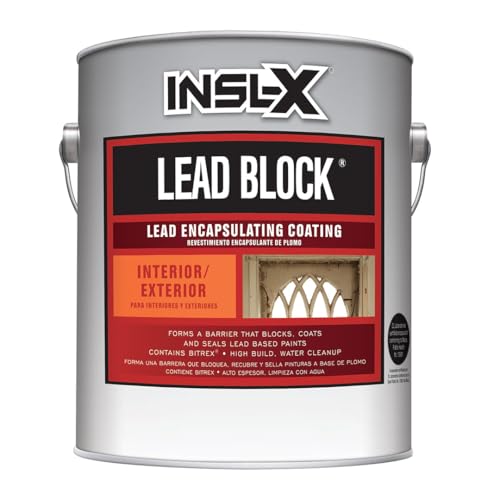
Renovated Older Homes: A Special Case
An older home that’s been fully renovated or repainted doesn’t eliminate lead paint risk — original lead paint layers often remain underneath newer, lead-free paint, meaning renovation work (sanding, demolition) on these homes can disturb old layers even if the visible surface is a modern repaint.

How Large the Pre-1978 Category Actually Is
It is easy to read “older homes carry risk” as describing an unusual situation. EPA’s own figure says otherwise: approximately three-quarters of homes in the United States built before 1978 still contain some lead-based paint[1]. On the other side of the line, EPA states the federal government banned the sale of lead-based paint for use in homes and childcare facilities in 1978[1].
That is what makes this comparison unusually clean compared with hazards like radon, where a construction date tells you almost nothing. Here the date genuinely partitions the housing stock. What it does not do is rank two houses on the same side of the line, and most people buying an older home are choosing between pre-1978 properties rather than across the boundary.
Within the Older Category, Condition Is the Variable
EPA frames residential lead risk in terms of the state of the paint rather than its presence, stating that if the lead-based paint is in good shape it is usually not a problem, and that children can live safely in homes that have lead-based paint as long as paint and surfaces are in good condition and surfaces are kept clean[1]. The counterpart is equally specific: old or worn lead-based paint, especially on surfaces subject to constant friction like doors or window sills, can produce chips and dust that become a hazard when inhaled or ingested[1].
Read together, those two sentences say a well-maintained 1910 house can be a lower-exposure environment than a neglected 1972 one, even though the older building is far more likely to contain lead paint and probably contains more of it. Age predicts presence. Condition, and especially the condition of friction surfaces, predicts dust.
Renovation Is Where the Comparison Inverts
A renovated older home is the case people most often read as resolved, and it is the case that most reliably is not. EPA states that any renovation, repair or painting project in a pre-1978 home or building that has lead-based paint can easily create dangerous lead dust[2], and that renovation or repair activities disturbing painted surfaces in older homes may create large amounts of lead dust, with projects creating even a small amount of dust posing health risks[1].
The layer underneath is the reason. A modern repaint over intact lead paint is the interim control working exactly as intended right up to the moment someone sands, scrapes or demolishes through it. So a freshly renovated pre-1978 house can be an excellent purchase and still be a house where the next project needs a certified firm, because EPA requires certification for anyone paid to disturb painted surfaces in pre-1978 housing regardless of how new the visible surface looks[2].
What Each Category Should Actually Do
For a pre-1978 home, EPA’s sequence is to find out what year the home was built, then either hire a certified lead-based paint inspector or risk assessor to perform an inspection, a risk assessment or both, or assume the home has lead-based paint[1]. From there it is maintenance work: inspect painted surfaces for chipping, peeling or deteriorating paint, paying attention to areas that rub together or get lots of wear such as windows, doors and stairways; clean hard surfaces with damp methods weekly; and fix small areas under six square feet promptly and without sanding[1].
For a post-1978 home, the residential paint question is closed and three others are not. Plumbing runs on 1986 rather than 1978[1]; soil carries the history of the site rather than the structure[1]; and occupational or hobby exposure arrives on clothing and shoes irrespective of the building[1]. The honest version of “new homes are fine” is that they are fine on one specific question.
FAQ
If my old home has been fully repainted, is the lead paint risk gone?
Not necessarily — original lead paint layers often remain underneath, and any renovation work disturbing those layers can create exposure risk.
Is a 1975 home much safer than a 1920 one?
More likely to contain less lead paint, but the same logic applies to both: EPA treats the pre-1978 category as a single class, recommending inspection by a certified professional or else assuming lead-based paint is present[1]. Within the category, condition of friction surfaces is what separates a low-exposure house from a high-exposure one[1].
Does the RRP Rule apply to my post-1978 house?
No. EPA scopes the rule to homes, childcare facilities and preschools built before 1978[2]. It would still apply to any pre-1978 property you rent out, run a childcare center in, or renovate for resale[2].
Construction date is a strong risk indicator for lead specifically, but testing remains the only way to confirm your home’s actual status.
References
- Reduce the Risk of Lead Exposure at Home. U.S. Environmental Protection Agency
- Lead Renovation, Repair and Painting Program. U.S. Environmental Protection Agency
These statements have not been evaluated by the Food and Drug Administration. This information is not intended to diagnose, treat, cure, or prevent any disease. Content is for informational purposes only and is not medical advice; consult a qualified healthcare provider before starting any supplement. As an Amazon Associate we earn from qualifying purchases.
