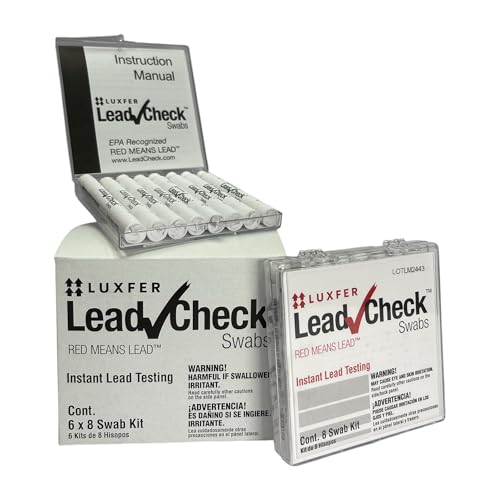
Cost shouldn’t be a barrier to knowing your lead paint status. Several programs offer free or discounted testing and screening.
- State and local health departments often offer free or subsidized testing, especially in older-housing areas.
- HUD funds Lead Hazard Control programs providing assessment and remediation assistance.
- Pediatric blood lead screening is often available free or low-cost through Medicaid or well-child visits.
- Check availability directly with these programs rather than assuming a specific one is currently active.
State and Local Health Department Programs
Many state and city health departments, particularly in areas with older housing stock, offer free or subsidized lead paint testing and pediatric blood lead screening — check your specific local health department for current program availability.
Health department help is real but rarely advertised well, and it is almost never organized the way homeowners expect. Some jurisdictions lend or hand out consumer test kits, some send a certified risk assessor to the property at no charge, and some do neither directly but fund a community organization that does. The only reliable way to find out is to ask your county or city health department what exists at your address.
Targeting is the other thing to understand. Because these programs run on limited budgets, they commonly prioritize older housing stock, households with young children or a pregnant resident, and specific neighborhoods with a documented history of elevated blood lead results. Falling outside the priority group does not always mean you are ineligible, but it usually means a longer wait.
HUD-Funded Lead Hazard Control Programs
HUD’s Lead Hazard Control and Healthy Homes programs fund grants to local governments and organizations providing free lead hazard assessment and remediation assistance, particularly for lower-income households with young children [1].
These programs are funded federally and administered locally, which is why two neighboring counties can offer noticeably different services. The local grantee typically bundles the assessment with the remediation, so the free or low-cost inspection is the front door to a package rather than a standalone service you can take elsewhere.
That bundling is an advantage if you intend to do the work anyway and a limitation if you only wanted a diagnosis. If your goal is simply to know whether lead-based paint is present before you buy or renovate, say so when you call, because the program staff can usually tell you in one conversation whether their track fits your situation.

Pediatric Blood Lead Screening
Many state Medicaid programs and pediatric practices offer free or low-cost blood lead screening for young children as a standard part of well-child visits — ask your pediatrician about this if it hasn’t already been discussed.
Blood lead testing measures the child rather than the house, so it answers a different question than a paint inspection does. It is still worth knowing about here, because for children enrolled in Medicaid, blood lead screening is a required benefit under EPSDT at defined ages, which makes it one of the few genuinely free and universally available pieces of this picture.
Many pediatric practices will also order the test outside those requirements when a family reports living in pre-1978 housing, especially if a renovation is planned or underway. An elevated result frequently triggers a publicly funded environmental investigation of the home, which is a route to a free assessment that no program brochure lists.

What a Free Program Actually Delivers
The word testing covers two different services, and free programs differ sharply in which one they provide. A lead inspection identifies whether lead-based paint is present on specific surfaces, normally using an XRF analyzer. A risk assessment goes further and identifies actual hazards, including deteriorated paint, contaminated dust, and bare soil, then recommends what to do about each [2].
Ask which of the two you are being offered, and ask whether you receive a written report you can keep. A verbal result is much less useful later, because a written inspection or assessment report is what you hand to a contractor for scoping, to a buyer during disclosure, or to a program that requires documentation before funding work.
How to Find the Program That Covers Your Address
Start with your county health department rather than a national search, because these programs are administered at the county or city level and national directories go stale quickly. If the county has nothing open, ask them directly which agency currently holds the local lead hazard control grant, since that grantee is sometimes a housing authority or a nonprofit rather than the health department itself [3].
Two other calls are worth making. Local community action agencies often administer weatherization and rehabilitation funds that touch the same housing stock, and university extension offices in some states run soil and dust testing at low cost. Neither is a lead program on paper, and both regularly help homeowners who could not find one.
FAQ
How do I find a free lead paint testing program in my area?
Check your state or city health department’s website and ask about HUD-funded Lead Hazard Control programs, particularly if you’re in an area with significant older housing stock.
Are free consumer test kits as reliable as a professional inspection?
No. Consumer kits are a screening tool and can miss lead under later layers of paint or return an ambiguous reaction. They are useful for a first look, but a negative kit result is not documentation that a home is free of lead-based paint.
Will using a free program put a record of lead on my property?
Findings from a publicly funded assessment produce a report you will generally need to disclose to future buyers or tenants under the federal disclosure rule [4]. That obligation attaches to what you know, though, not to who paid for the testing.
Program availability changes frequently — confirm current offerings directly rather than assuming based on general information.
References
- Office of Lead Hazard Control and Healthy Homes. U.S. Department of Housing and Urban Development
- Lead Abatement, Inspection and Risk Assessment. U.S. Environmental Protection Agency
- Healthy Homes – Grant Opportunities. U.S. Department of Housing and Urban Development
- Real Estate Disclosures about Potential Lead Hazards. U.S. Environmental Protection Agency
These statements have not been evaluated by the Food and Drug Administration. This information is not intended to diagnose, treat, cure, or prevent any disease. Content is for informational purposes only and is not medical advice; consult a qualified healthcare provider before starting any supplement. As an Amazon Associate we earn from qualifying purchases.